
A craft or trade is a action or a profession that requires particular skills and knowledge of adept work. In a historical sense, particularly the middle Ages and earlier, the term is usually applied to people occupied in small-scale production of goods, or their maintenance, for example by tinkers. The traditional term craftsman is nowadays often replaced by artisan and rarely by craftsperson (craftspeople).
Historically, the more specialized crafts considering tall value products tended to concentrate in urban centers and formed guilds. The knack required by their professions and the need to be for all time functional in the clash of goods often demanded a generally later level of education, and craftsmen were usually in a more privileged perspective than the peasantry in societal hierarchy. The households of craftsmen were not as self-sufficient as those of people engaged in agricultural perform and consequently had to rely on the quarrel of goods. Some crafts, especially in areas such as pottery, woodworking, and the various stages of textile production, could be practiced upon a part-time basis by those as a consequence involved in agriculture, and often formed ration of village life.
Once an apprentice of a craft had the end his apprenticeship, he would become a journeyman searching for a place to set occurring his own shop and create a living. After he set happening his own shop, he could subsequently call himself a master of his craft.
This system of a stepwise log on to mastery of a craft, which includes the obtainment of a sure amount of education and the learning of skills, has survived in some countries of the world until today. But crafts have undergone deep structural changes in the past and during the get older of the Industrial Revolution. The growth production of goods by large-scale industry has limited crafts to present segments in which industry's modes of operating or its mass-produced goods would not or cannot satisfy the preferences of potential buyers. Moreover, as an repercussion of these changes, craftspeople today increasingly create use of semi-finished components or materials and adjust these to their customers' requirements or demands and, if necessary, to the environments of their customers. Thus, they participate in a sure estrangement of labour amid industry and craft.
The term crafts is often used to portray the relations of artistic practices within the associates decorative arts that traditionally are defined by their connection to energetic or utilitarian products (such as sculptural forms in the vessel tradition) or by their use of such natural media as wood, clay, ceramics, glass, textiles, and metal.
The Arts and Crafts motion originated in Britain during the late 19th century and was characterized by a style of trimming reminiscent of medieval times. The primary artist united taking into consideration the pastime is William Morris, whose be active was reinforced taking into consideration writings from John Ruskin. The goings-on placed a high importance upon the quality of craftsmanship even though emphasizing the importance for the arts to contribute to economic reform.
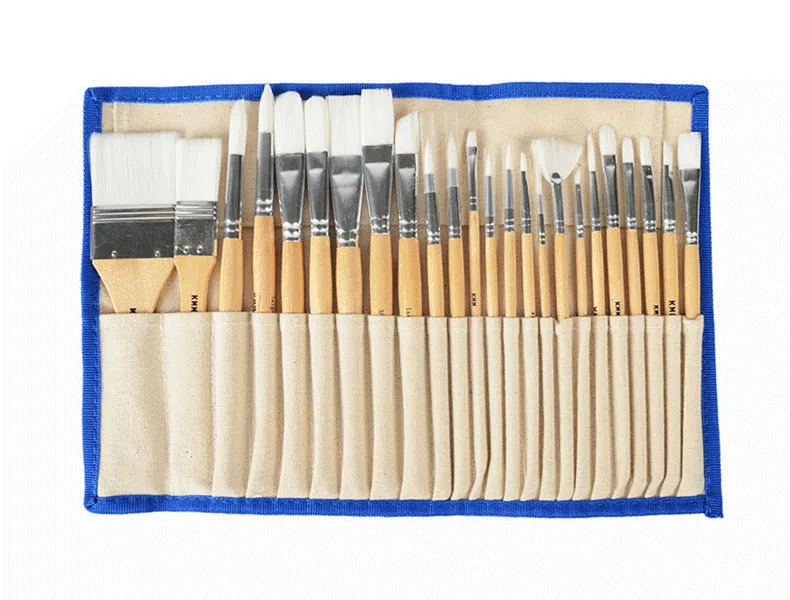
BOSOBO Paint Brushes Set, 2 Pack 20 Pcs Round Pointed Tip Paintbrushes Nylon Hai eBay

bosobo paint brushes 2 pack eBay

BOSOBO Mouse Pad, Round Mandala Mat, 7.9 x inch, Colour eBay




No comments:
Post a Comment